
Guide · Façade painting
How to paint a seafront façade that lasts
Salt air, strong sun and humidity punish coastal façades like no other climate. This is what really separates repainting every year from lasting more than five.
 By VARELUX team 4 June 2026 · 2 min read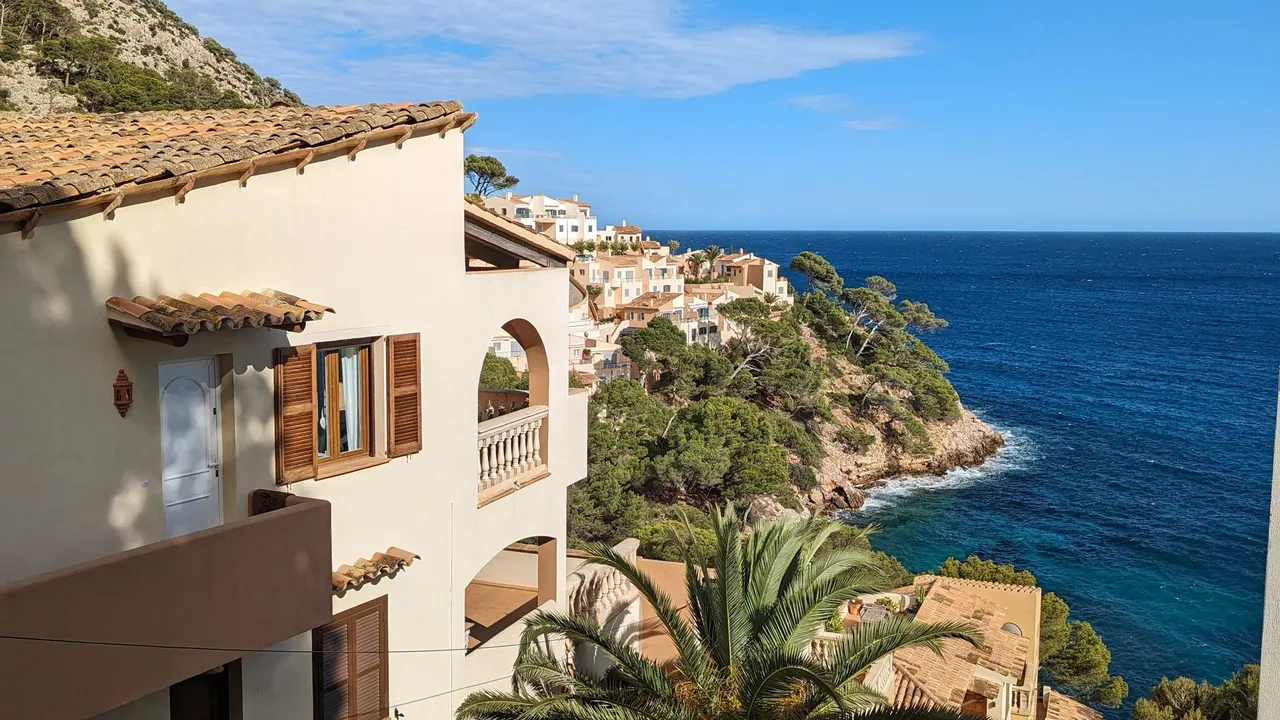
If you live on the seafront, you will have noticed your façade “ages” far sooner than inland: the colour fades, whitish stains appear and, in time, the paint blisters and flakes. It is not bad luck — it is salt air working against you.
Why the marine atmosphere ruins paint
Coastal air carries salt spray: microscopic salt particles that settle on the façade and work into the pores of the render. When that salt crystallises and rehydrates with changes in humidity, it expands in volume and breaks the coating from within — the cause of efflorescence (those white stains) and flaking. Add the strong sun, which breaks down resins and fades pigments, and the humidity from the marine atmosphere and occasional heavy rain.
A conventional decorative paint is simply not formulated for that combined assault. On the coast, repainting “with good paint” alone usually lasts a season or two.
The golden rule: let the wall breathe
The most expensive mistake is sealing the façade with a rigid, impermeable film. It traps the moisture rising through the wall, which cannot evaporate, and ends up pushing the paint until it blisters.
The technical answer is the opposite: a breathable, low-water-absorption coating. It lets the wall’s internal vapour escape while keeping liquid water and salt out. In practice, seafront façades usually call for siloxane or elastomeric acrylic systems:
- Siloxane: highly breathable and water-repellent, ideal where the wall is sound and you want maximum protection against water and salt.
- Elastomeric: as well as protecting, it bridges hairline cracks without splitting, useful on substrates with small movements.
70% of the result is preparation
No product, however good, lasts over a poorly prepared surface. Before painting it pays to: pressure wash to remove salts and dirt, cut out flaking areas, seal cracks with flexible filler, treat damp at its source and apply a primer that consolidates the substrate. On high areas, scaffolding or access equipment to reach eaves and parapets properly.
How long does a well-done coastal façade last?
With the right preparation and the right system for each wall’s exposure, a seafront façade keeps its colour and protection for around 5 to 8 years before it asks for a repaint; in more sheltered positions, longer. The difference is not the tin of paint, but the diagnosis beforehand and the workmanship.
Is your façade already showing signs of salt damage? See our villa painting service on the Costa del Sol or tell us about your project and we’ll arrange a no-obligation site visit. We apply this salt-resistant approach right along the coast, from seafront villas in Estepona to the apartment blocks of Torremolinos.
Shall we talk about your project?
Site visit and no-obligation quote. We reply on WhatsApp or call you whenever suits you.
or ask for a written quote →Keep reading
Guide · Painting
Work on your Costa del Sol home from abroad
The flat needs painting or new wiring and you are a flight away. Almost all of it can be arranged from home, but six things decide whether it goes smoothly: the quote, the community of owners, the town hall, the VAT, the invoice and who holds the keys.
Read the guide: Work on your Costa del Sol home from abroad
Guide · Painting
Washable paint for a Costa del Sol holiday rental
Suitcases scuff the hallway, guests lean on the wall by the bed, and the cleaner wipes it all down between stays. A holiday rental needs a paint that takes that, a job that fits between two bookings and a flat that has aired before the next check-in.
Read the guide: Washable paint for a Costa del Sol holiday rental