
Guide · Painting
Having work done on your Costa del Sol home while you live abroad: community, permits, VAT and keys
The flat needs painting or new wiring and you are a flight away. Almost all of it can be arranged from home, but six things decide whether it goes smoothly: the quote, the community of owners, the town hall, the VAT, the invoice and who holds the keys.
 By VARELUX team 30 September 2026 · 7 min read
Owners who live abroad ask the same things on the expat forums: whether interior work needs a permit, who applies for it, how to pay safely and who lets the workers in. This guide answers them for Andalucía, with the source behind each answer.
This guide is general information checked on 30 September 2026, not legal or tax advice: for your own case, ask your community’s administrator, a gestor or the town hall.
1. The quote: in writing, and every change too
Andalucía’s consumer authority says you are entitled to a quote before the work and to an invoice when it is finished, and recommends always asking for the quote in writing, because it works as the order for the job (Consumo Responde, Junta de Andalucía, in Spanish). Any change to the quote must also be in writing and accepted by both sides: Andalucía’s consumer law treats raising the price without the customer’s agreement, or doing work the customer has not requested or authorised, as offences (Law 13/2003, article 71.4, in Spanish). An email or a WhatsApp message with the new price, and your reply accepting it, is enough to leave a record.
Pay by bank transfer and keep the receipt. When one side is a business, the law does not allow cash for payments of €1,000 or more, or of €10,000 or more if the payer is a private individual who can show their tax home is outside Spain and is not acting as a business. Splitting the payment does not help: the amounts are added up (Law 7/2012, article 7, in Spanish).
2. The community of owners: tell them before you start
For work inside your flat you do not need the community’s permission, but you do have to tell its representative beforehand. The Horizontal Property Law lets each owner alter the fittings and installations of their flat as long as it does not affect the safety, structure or outside appearance of the building or harm other owners, “debiendo dar cuenta de tales obras previamente a quien represente a la comunidad”: giving notice of the works beforehand to whoever represents the community, which by law is its president (articles 7.1 and 13.3, in Spanish). In practice, an email with the dates to the community’s president and the property administrator does it, and it saves you a complaint from a neighbour about the noise.
Anything that changes the structure, the outside of the building or the common areas, such as enclosing a terrace, needs the owners’ meeting to approve it (article 10.3). And when the building needs work to stay in good repair, including its façade, that work is compulsory for the community, needs no prior vote and is paid by all owners, usually through a levy (article 10.1 and 10.2); a purely cosmetic repaint or a change of colour goes to the owners’ meeting.
Two duties matter especially if you live abroad. You must give the community’s secretary an address in Spain for notices; if you do not, notices are sent to the flat itself, and one handed to whoever is staying there counts as delivered; if that is not possible, a notice on the community board takes full legal effect after three days (article 9.1.h). And you must allow access to your flat for repairs the building needs (article 9.1.c and d), so someone nearby should have a key. If you want to let the flat to tourists, there is a further rule: since April 2025 a new tourist rental in a building needs the community’s express approval, as we explain on our page for holiday rental owners.
3. The town hall: often nothing, sometimes a declaración responsable
Andalucía’s planning law puts minor works that need no technical project under a declaración responsable, a statement you file with the town hall, with the documents it asks for, that lets the work start the same day; town halls may exempt from even that works with no bearing on planning or building rules (LISTA, article 138, in Spanish), and the regulation that develops the law gives simple repair and decoration as an example (Decree 550/2022, article 293, in Spanish). So it depends on the town:
- Málaga city does not require a licence or a declaración responsable for interior work in existing, legal homes (with their occupancy licence or equivalent), including interior painting and electrical installations, as long as it does not touch the structure, move or remove partition walls or change the outside, and except in protected buildings (municipal by-law, article 19.17, December 2025, in Spanish).
- Marbella exempts, among other things, interior painting of any size and the interior installations of a single home under 100 m², as long as the job costs no more than €10,000 (adding up works done at the same time) and needs no scaffolding to work above 2 m (Marbella town hall instruction, January 2026, in Spanish).
- In other towns, check the local by-law before starting. Mijas, for example, lists minor works under the declaración responsable (Mijas town hall, in Spanish).
The façade has its own rules, which we cover in do you need a permit to paint your facade. And electrical work has one more piece of paper, whatever the town hall says: when it applies, the installer issues the installation certificate, the CIE.
4. VAT: 10 % or 21 %
Renovation and repair work on a home is taxed at 10 % instead of 21 % when the customer is a private individual who uses the home for their own use, the home was finished at least two years before, and the materials supplied by the contractor are no more than 40 % of the price (VAT Law, article 91.Uno.2.10º, in Spanish). Spain’s Directorate-General for Taxes has confirmed that the 10 % applies even if you do not live in the home, as long as it is for your own use, and that it does not apply if you let it (binding ruling V2964-23, in Spanish). A holiday rental counts as letting: the owner is treated as a business for VAT, so the repairs are taxed at 21 % (binding ruling V5449-26, August 2026, in Spanish).
A decree-law published on 30 September 2026 would, from 1 December 2026, extend the 10 % to homes let as someone’s main residence, but not to holiday rentals. It would also make the 10 % depend in every case, including a home you use yourself, on paying by card, bank transfer, named cheque or payment into the contractor’s account: pay cash and the rate is 21 % (Royal Decree-law 26/2026, article 7, in Spanish). When this guide was written the Congress of Deputies still had to vote on it, so check its status before counting on it.
5. The invoice and your NIE
A full Spanish invoice for work done in Spain must show the customer’s tax identification number (invoicing regulation, article 6, in Spanish), and for a foreign national that number is the NIE, the foreigner’s identity number (Royal Decree 1065/2007, article 20, in Spanish). Most owners have one from buying the property: have it ready when you accept the quote, and if you do not have one, tell us before accepting.
6. Keys and access
Spain’s Guardia Civil advises never hiding keys in the letterbox, a plant pot or the meter box, and changing the lock cylinder when household staff who had access to your keys stop working for you (Guardia Civil, in Spanish). For a job, decide who opens the door, your property manager, a neighbour or a key-holding service, and tell them in writing who is coming and on which days.
How we do it
You send us the size of the property, the rooms and a few photos and, if that is enough, we reply with a fixed written price, showing the VAT rate that applies to you and the total, and the number of days; if not, we visit first, at no cost. As you accept from a distance, you have 14 days to change your mind (consumer law, article 102, in Spanish); if you want us to start sooner, just ask for it in writing. We agree the access with your manager, the community or a neighbour, send the dates to the community’s president and administrator on your behalf, send you photos as we go and invoice with your NIE, to be paid by transfer. See how it works for holiday rental owners, or tell us about your property. And if you are also thinking about solar panels for a home you only use part of the year, Solar Master, our sister company (same team), explains it in solar panels for holiday homes.
Shall we talk about your project?
Site visit and no-obligation quote. We reply on WhatsApp or call you whenever suits you.
or ask for a written quote →Keep reading
Guide · Painting
Washable paint for a Costa del Sol holiday rental
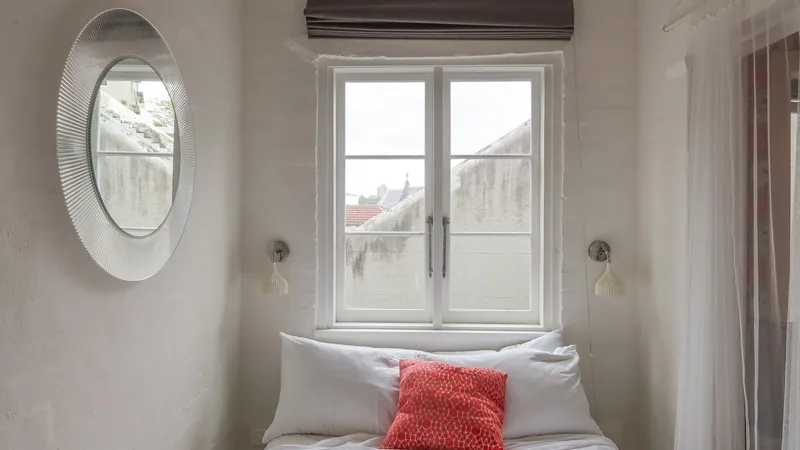
Suitcases scuff the hallway, guests lean on the wall by the bed, and the cleaner wipes it all down between stays. A holiday rental needs a paint that takes that, a job that fits between two bookings and a flat that has aired before the next check-in.
Read the guide: Washable paint for a Costa del Sol holiday rental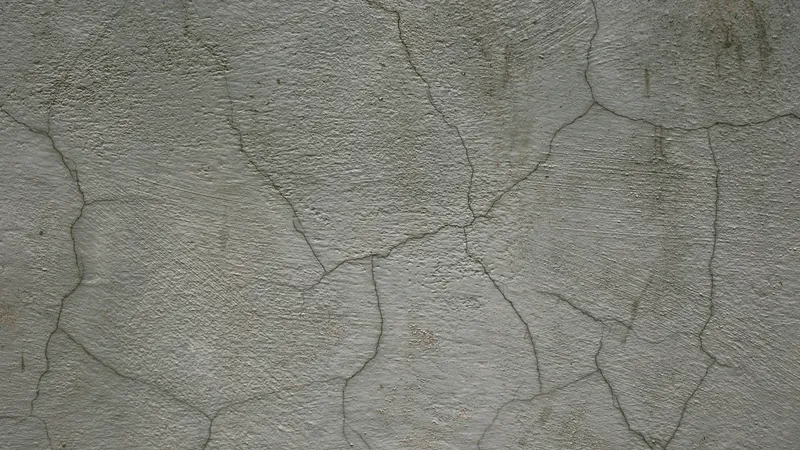
Guide · Painting
Cracked monocapa: elastic or silicate paint?
Monocapa render fades with age and fills with fine cracks, and the question comes straight away: an elastic paint to cover them, or a silicate that lets the wall breathe? It depends on three things, and you can check them.
Read the guide: Cracked monocapa: elastic or silicate paint?