
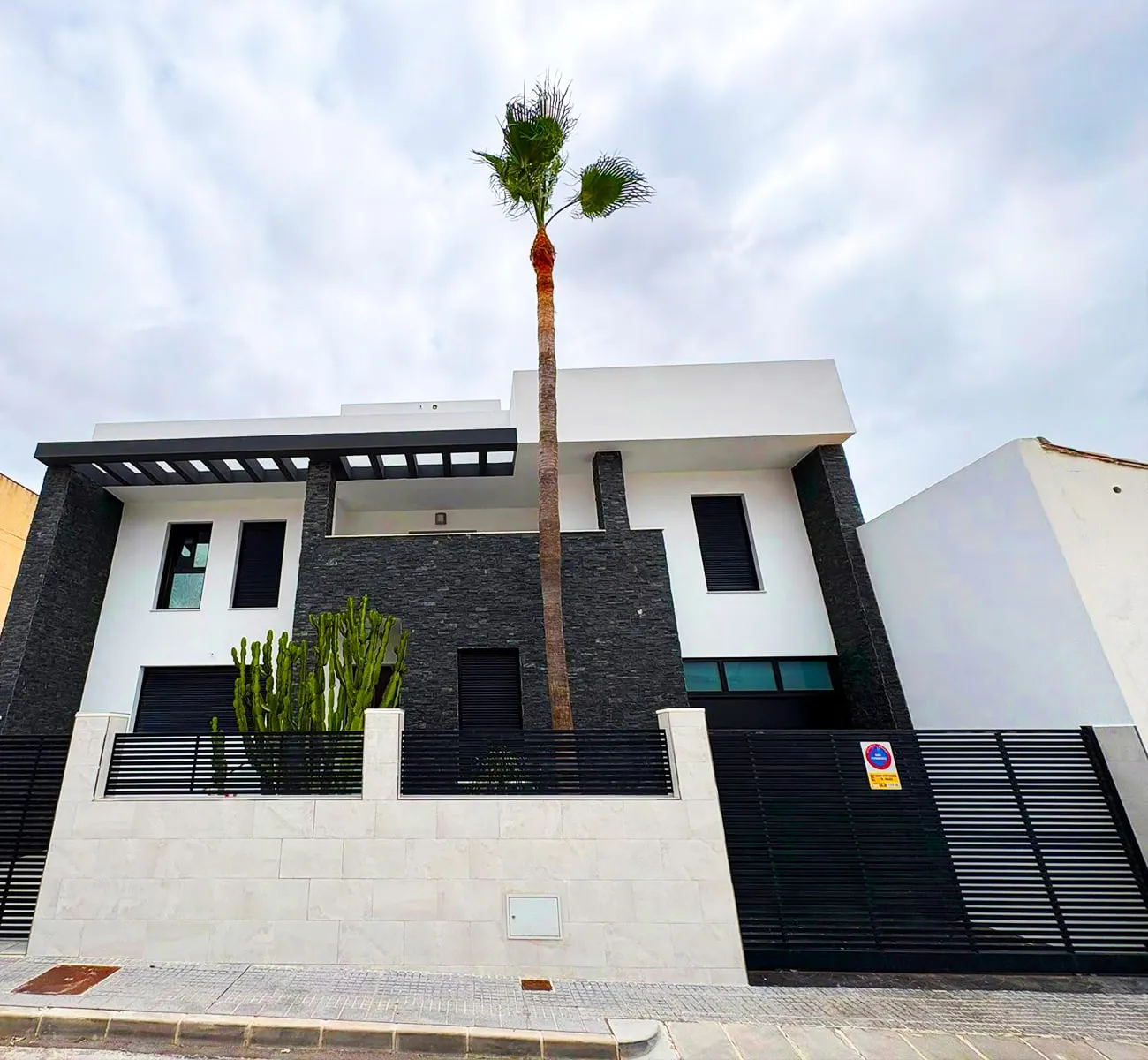
Service · Painting
Painting for villas and homes on the Costa del Sol
Façades, interiors, waterproofing and restoration with a finish worthy of your villa. Deal directly with the people doing the work.
- Free visit and quote
- Written guarantee
- Direct service
At a glance
- Specialty
- Façades & exteriors
- Also
- Interiors & waterproofing
- Finish
- High-end
- Area
- Across the Costa del Sol
What's included
What our painting service covers
Painting for luxury villas on the Costa del Sol: façades, interiors and waterproofing with a high-end finish and a written guarantee.
Façades
Façade painting and coatings built to withstand strong sun and coastal salt air.
Interiors
Walls, ceilings and woodwork with fine, clean finishes — even in occupied homes.
Waterproofing
Roofs, terraces and walls: we treat damp and leaks at the source.
Restoration
Surface prep, crack sealing and recovery of damaged surfaces.
Why a coastal façade needs a different approach
On the Costa del Sol a façade takes far more punishment than inland, and it is worth understanding why before deciding how to paint it. Strong sun fades pigments and breaks down resins; salt air on the seafront crystallises in the pores of the render and bursts the coating from within; and humidity — from occasional heavy rain and the marine atmosphere — causes efflorescence, staining and flaking. An ordinary decorative paint, however good the brand, is simply not built for that combined assault. We break it down step by step in how to paint a seafront façade.
The technical answer is not “more paint” but the right system for each wall’s exposure. On seafront façades we usually work with breathable, low-water-absorption coatings (siloxane or elastomeric acrylics): they let the moisture inside the wall escape while keeping out liquid water and salt spray. Where there are hairline cracks, an elastomeric system moves with the wall without cracking; for monocapa façades we compare it with silicate in elastic or silicate paint for cracked monocapa. The most expensive mistake is sealing a damp wall with a rigid, impermeable film: it traps the moisture and ends up blistering within a season or two.
Preparation: 70% of a good paint job
The finish you will see in five years is decided before the first tin of paint is opened. That is why we never start by painting. First we assess the surface and prepare it: pressure washing to remove salts and dirt, cutting out flaking areas, sealing cracks with flexible filler, treating damp at its source and applying a primer that consolidates the substrate and ensures adhesion.
Where the wall calls for it, we set up scaffolding or use access equipment to reach eaves, parapets and high areas properly, rather than stretching from below. It is the least glamorous part of the job, and the part that truly separates work that lasts from work that needs redoing every year.
Interiors with a villa-grade finish
A premium villa interior leaves no room for shortcuts: poor preparation shows the moment low evening light rakes across a wall through a picture window. We sand, fill and apply as many coats as needed so walls and ceilings come out flat and even, with no roller marks or ragged edges. We pay particular attention to woodwork, false ceilings and the joints around mouldings, where the difference between a correct job and a fine one really shows.
We work zone by zone, protect floors and furniture and tidy up each day. If you let the property to tourists, we fit the work between two bookings of your holiday rental and leave it clean for the next check-in. For timber and metal joinery we offer spray, brush and roller lacquering and enamelling depending on the piece, aiming for a smooth, durable surface.
Waterproofing and damp solved at the source
Damp is not covered up with paint: it is solved where it gets in. On flat roofs, walk-on terraces and exposed walls we find the point of water entry and apply the right waterproofing system — liquid membranes, sheet membranes or mortars depending on the case — before any decorative finish. Treating the cause stops the stain returning within months and protects the structure long term, especially important in an area of occasional heavy rain and high ambient humidity.
How long it lasts and what shapes the result
With proper preparation and the right system, a coastal façade keeps its colour and protection for around 5 to 8 years before it asks for a repaint; interiors, much longer. The price of each job depends on the condition of the surface, the area and height, the system and the level of finish — which is why we offer a free site visit and a clear written quote rather than a phone figure.
Need the wiring looked at too? We coordinate painting and electrical work for villas in a single job, with one point of contact. Prefer to talk first? Tell us about your project and we’ll arrange a no-obligation visit.
How we work
Simple, clear, no surprises.
-
Visit & quote
We come to your villa, assess the work and give you a clear, no-obligation quote.
-
We get to work
Clean, on-time work, dealing directly with the people doing it. No surprise subcontractors.
-
Handover & guarantee
We review the result with you. Official electrical certificate (CIE) where it applies, and a written guarantee.
Service area
Painting across the Costa del Sol
We serve the main towns of the Costa del Sol:
- Painting in Marbella
- Painting in Benahavís
- Painting in Estepona
- Painting in Mijas
- Painting in Fuengirola
- Painting in Málaga
- Painting in Torremolinos
- Painting in Benalmádena
We coordinate painting and electrical work in a single job, with one point of contact.
View service: ElectricalPractical guides
Painting guides for your villa
- Do you need a permit to paint your villa facade?
Painting a facade rarely needs a licence: depending on the town, a declaración responsable or no formality at all, except in protected zones.
- Damp before painting: how to identify it
Painting over damp without treating the cause brings it back. First identify the type — rising, condensation or a leak — by its symptoms, and treat it.
- Painting a seafront façade on the Costa del Sol
On the coast the key is not the paint brand: it is preparing the wall and using a breathable, low-water-absorption coating.
- Washable paint for a Costa del Sol holiday rental
For a rental, pick a class 1 or 2 washable paint under EN 13300, paint between stays and air the flat before check-in.
- Work on your Costa del Sol home from abroad
From abroad: get a written quote, tell the community first, check your town hall’s rules, know which VAT applies and pay by transfer.
- Cracked monocapa: elastic or silicate paint?
Elastic paint bridges fine cracks but breathes less; silicate breathes freely but is not designed to bridge cracks.
Frequently asked questions
Frequently asked questions about painting
How often does a Costa del Sol façade need repainting?
On the seafront, the mix of strong sun, salt air and humidity shortens the life of any paint. With proper surface preparation and a breathable, UV-resistant system, a façade typically keeps its colour and protection for around 5 to 8 years before it needs repainting; in sheltered or inland positions, longer. What makes the difference is less the paint brand than the preparation and choosing the right product for each wall’s exposure.
What kind of paint is best for a wall exposed to salt air?
For seafront façades we generally use breathable, low-water-absorption coatings — siloxane or elastomeric acrylics — that let the wall’s vapour escape while keeping liquid water and salt spray out. On walls with hairline cracks, elastomeric systems flex with the wall’s small movements without cracking. The key mistake to avoid is sealing a damp wall with a rigid, impermeable film: it traps moisture and ends up blistering.
What does the price of painting a villa depend on?
On the condition of the surface (whether cracks, damp or flaking need repairing), the area and height (scaffolding or access equipment), the system chosen and the level of finish. That is why we do not quote over the phone: we carry out a free site visit, assess the work and give you a clear written quote with no obligation.
Do you work in occupied homes?
Yes. We protect furniture and floors, work zone by zone and leave the house tidy every day. We coordinate timings with you to cause as little disruption as possible, so you can keep living in the house while the work progresses.
Do you guarantee the work?
Yes, we provide a written guarantee on the work carried out. The scope depends on the type of job and the system applied; we set it out in the quote before we start.
Can you do painting and electrical work together?
Yes. We coordinate both trades in a single job with one point of contact, so you don’t have to manage several teams or juggle different schedules.
Shall we talk about painting your villa?
Site visit and no-obligation quote anywhere on the Costa del Sol. We reply on WhatsApp or call you whenever suits you.
or ask for a written quote →