
Guide · Painting
Elastic or silicate paint for a cracked monocapa façade on the Costa del Sol?
Monocapa render fades with age and fills with fine cracks, and the question comes straight away: an elastic paint to cover them, or a silicate that lets the wall breathe? It depends on three things, and you can check them.
 By VARELUX team 29 September 2026 · 5 min read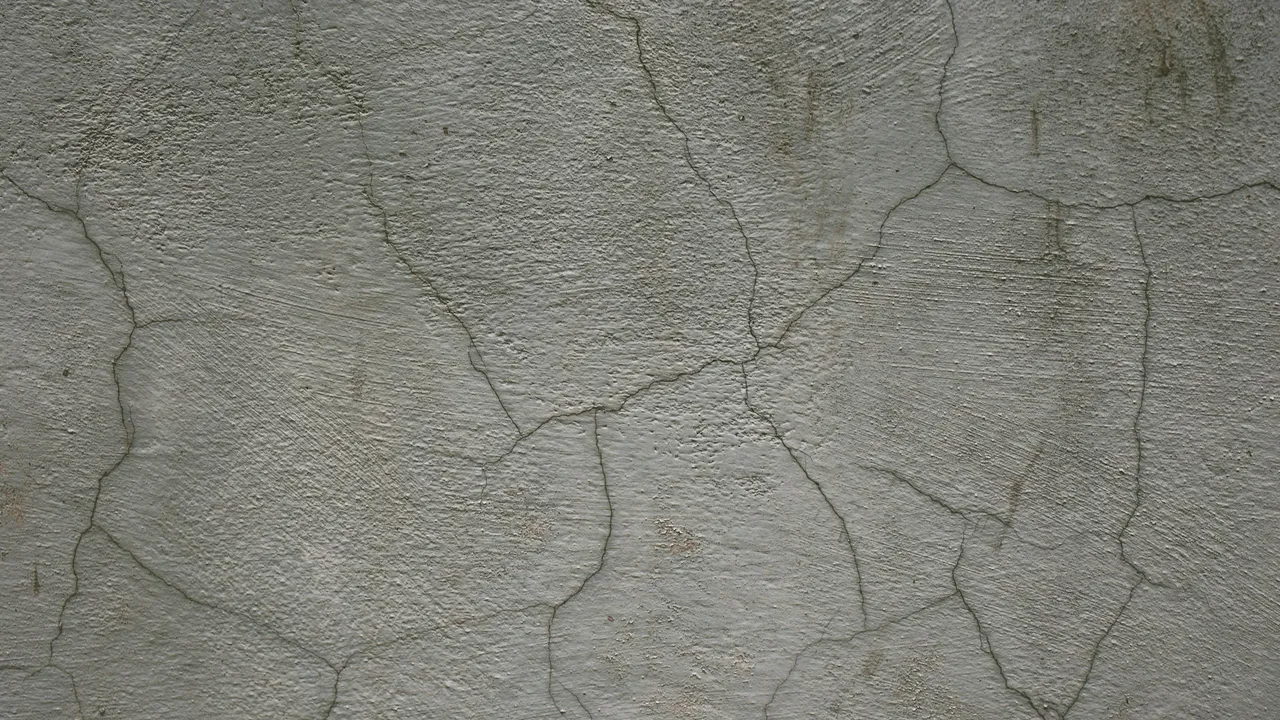
Monocapa is the finish on many Costa del Sol villas: a render applied in a single coat, with the colour mixed right through it. Over time it fades, gets dirty and develops fine cracks. Before choosing a paint, answer three questions: what kind of crack it is, whether the wall has damp, and whether the monocapa has already been painted.
What kind of crack you have
Not every crack needs the same thing. Fine cracks in a network spread across the wall are usually caused by the render shrinking as it cured and, if they are not growing, a suitable paint can cover them. Cracks that follow a line — where the floor slab meets the wall, or a diagonal running from the corner of a window — usually point to movement. If a crack has widened over the months or comes back after being filled, paint alone will not fix it: first find out why it is moving and repair it, and only then paint. This is to help you get your bearings, not a diagnosis: that is done by looking at the façade. Size matters too: the data sheet of the elastic paint we cite below, for example, says cracks wider than 1 mm must be cleaned out and repaired with mortar or filler before painting.
How to compare them: the EN 1062-1 classification
Façade paints are classified under the European standard EN 1062-1 (UNE-EN 1062-1 in Spain), which gives each product a set of classes that should appear on its data sheet (summary by ASEFAPI, the Spanish paint makers’ association; full table of classes; both in Spanish). Three of them matter for this decision:
| Class | What it measures | Scale |
|---|---|---|
| A | Crack bridging: the crack width the film spans without breaking | From A0 (no requirement) to A5 (over 2.5 mm in testing) |
| V | Water-vapour permeability: how well the wall can breathe | V1 high · V2 medium · V3 low |
| W | Liquid-water permeability: how much rain gets in | W1 high · W2 medium · W3 low |
On a façade you want vapour to get out (high V) and rain to stay out (low W). Elastic and silicate paints strike that balance in different ways.
Elastic paint: it bridges cracks, but breathes less
An elastic acrylic paint forms a thick film that stretches with the wall. As a public example, not a recommendation, the data sheet of a premium elastic paint (in Spanish) states crack-bridging class A5, water uptake of 0.041 kg/m²·h^0.5 — class W3, low — and an Sd of 0.74 m — class V2, medium vapour permeability. In other words: it bridges cracks and keeps rain out well, but its vapour permeability is medium, not high. Its data sheet requires a completely dry surface, free of efflorescence and mould, with cracks over 1 mm repaired first. It suits monocapa with shrinkage micro-cracks on a sound wall with no damp inside. If the wall holds moisture that needs to get out — rising damp from the ground, for example — a film that breathes less can end up blistering: check first where the damp is coming from.
Silicate paint: it breathes, but does not bridge cracks
Silicate paint reacts with the mineral surface: its data sheet says it «petrifies» it. According to the data sheet of a potassium silicate paint (in Spanish), it stands out for «extraordinary water-vapour permeability», which makes it resistant to blistering, and it does not flake because it creates no stresses. It is intended for mineral renders such as unpainted monocapa. It has two clear limits: it declares no crack-bridging ability — its data sheet gives no A class — so cracks must be repaired beforehand; and it is not recommended over organic paints, such as plastic paints, because it has to touch the mineral surface to react: if the monocapa has already been painted, that paint would have to be removed completely. The manufacturer also recommends pastel colours, as strong shades are hard to keep even. It suits monocapa that has never been painted, with the cracks already repaired, or a wall that needs to breathe — provided the cause of the damp has been dealt with first and the surface is dry when painted.
How to tell if your monocapa has been painted
A clue: because monocapa carries its colour right through, a scrape in a discreet spot usually shows a similar shade underneath. If what comes away is a thin film of a different colour, or the surface has a sheen and a plasticky feel, it has most likely been painted. It is not a conclusive test — dirt, repairs or weathering can mislead — but it helps. And that detail decides a lot: over a plastic paint, silicate is ruled out unless everything is stripped, and the choice becomes an elastic paint or another finish compatible with the existing one.
So, which one?
| Situation | General guidance |
|---|---|
| Unpainted monocapa, fine stable cracks, wall that needs to breathe | Silicate, with the cracks repaired first |
| Painted or unpainted monocapa, network micro-cracks, dry wall | Elastic |
| Monocapa already coated in plastic paint | Elastic or another compatible finish; silicate only after stripping |
| Crack that runs in a line, widens or comes back | Diagnose and repair before painting |
This is general guidance: every façade is assessed on site. On the seafront, sea salt also comes into play and the surface has to be washed and prepared: we cover it in how to paint a façade exposed to salt air. And before the scaffolding goes up, check whether your town hall needs to be notified: see the permit to paint a façade.
If you have a monocapa façade with cracks, ask us for a visit: it costs nothing, and you get a real quote once we have seen it, not a guess from a photo. It is part of our façade painting service.
Shall we talk about your project?
Site visit and no-obligation quote. We reply on WhatsApp or call you whenever suits you.
or ask for a written quote →Keep reading
Guide · Painting
Work on your Costa del Sol home from abroad
The flat needs painting or new wiring and you are a flight away. Almost all of it can be arranged from home, but six things decide whether it goes smoothly: the quote, the community of owners, the town hall, the VAT, the invoice and who holds the keys.
Read the guide: Work on your Costa del Sol home from abroad
Guide · Painting
Washable paint for a Costa del Sol holiday rental
Suitcases scuff the hallway, guests lean on the wall by the bed, and the cleaner wipes it all down between stays. A holiday rental needs a paint that takes that, a job that fits between two bookings and a flat that has aired before the next check-in.
Read the guide: Washable paint for a Costa del Sol holiday rental