
Guide · Electrical
Air conditioning in a holiday rental on the Costa del Sol: what Andalucía requires, the circuit and the power
Since 2024, a holiday rental in Andalucía that operates in May, June, July and August must have cooling in its bedrooms and living rooms. The unit is the easy part; what usually fails is the circuit and the power behind it. This is what the decree and the electrical regulations say.
 By VARELUX team 5 November 2026 · 8 min read
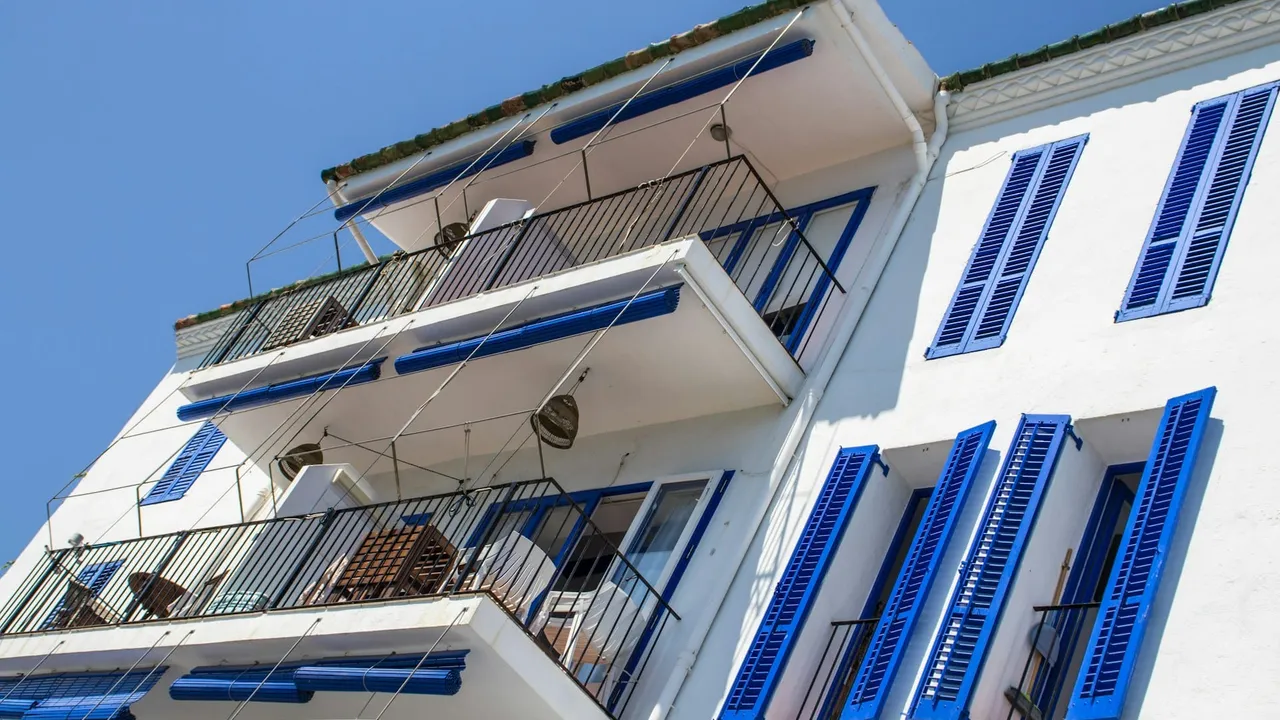
A guest writes that the bedroom is too hot to sleep in, or the power trips every afternoon when the air conditioning goes on. For an owner who lets a flat or villa on the Costa del Sol, the first is a question of what the rules require and the second is a question of the electrics. This guide covers both. Fitting the unit itself is a job for a refrigeration company, and we say why below.
This guide is general information checked on 5 November 2026, not legal or technical advice.
Does a holiday rental in Andalucía have to have air conditioning?
If its operating period includes May, June, July and August, it must have cooling in its bedrooms and living rooms. Andalucía’s holiday-rental decree, as amended in 2024, requires in that case “refrigeración centralizada o no centralizada por elementos fijos o portátiles en las habitaciones y salones”, and heating, also fixed or portable, when the period includes December, January, February and March. Heaters with incandescent elements, or that burn flammable liquids or gases, are not allowed (Decree 28/2016, article 6.1.e and f, as worded by Decree 31/2024, in Spanish; a later 2024 decree-law only added an exception for cave houses).
The months are those of the operating period declared to the Junta. The 2024 decree gave rentals six months to communicate their periods, and one that did not is treated as operating all year, so both requirements apply (additional provision one). If your rental only operates in part of those months, the wording does not settle it: ask the Junta’s tourism office. Rentals that were already registered when it came into force, on 22 February 2024, had one year to comply, until 22 February 2025 (Junta de Andalucía, FAQ for registered rentals, in Spanish). That deadline has passed.
Cooling and heating are also part of the price: the decree says the price per night always includes “calefacción, refrigeración”, along with water and electricity (Decree 28/2016, article 8.1, in Spanish). They cannot be charged as an extra.
Fixed or portable: what counts?
Both count under the 2024 wording. The original 2016 decree was stricter: fixed units if the rental operated from May to September, and heating from October to April (article 6.d of the 2016 text, in Spanish). That rule was annulled by the courts, and until the 2024 amendment the decree had no air-conditioning requirement at all: the Junta’s consolidated text from 2019, now out of date, shows the letter as removed (Junta de Andalucía, 2019 consolidated text, out of date, in Spanish). Many websites and forums still quote the 2016 rule.
What does not count is less clear. The decree does not define cooling. For one group of tourist apartments, a different category whose rules the same 2024 decree rewrote, it says that floor and table fans are not portable units (annex II of Decree 194/2010). We would not rely on a fan in a holiday rental either.
For the electrics, the difference is where the unit gets its power. A portable unit plugs into a socket, and the decree already requires sockets in every room (annex, letter a), but it adds its load to whatever else is on that socket circuit. A fixed split is wired from the consumer unit, and that is where the next rules come in.
What circuit does a fixed unit need?
In the low-voltage regulation’s model for homes, air conditioning has a circuit of its own. Planning for air conditioning puts a home in the high electrification grade, which adds circuit C9, “destinado a la instalación aire acondicionado, cuando existe previsión de éste” (REBT, ITC-BT-25, section 2.3.2, in Spanish). Table 1 of that instruction gives C9 a 25 A circuit breaker, copper cable of at least 6 mm², 25 mm conduit and a maximum of 5,750 W per circuit. Table 2 sets one air-conditioning point in each bedroom and one in the living room, two if it is larger than 10 m². The cable size is a minimum: the voltage drop must also stay at 3 % or less. In a large villa, distance matters. The Ministry’s technical guide puts the maximum length of a 6 mm² cable on a 25 A breaker at 43 m (Ministry guide GUÍA-BT-25, table B, in Spanish), and that guide is guidance, not regulation.
Those tables are written for new homes; an existing home does not have to be rewired to match them. But whatever is added or modified must meet today’s regulation “en lo que afecta a la parte modificada, reparada o ampliada”, provided the measures needed to keep the whole installation safe are taken (REBT, article 2.2.b). That is why, in an old villa, the electrician also checks the rest of the installation. In our reading, a new line for an air conditioner is such an addition, so it is sized like a C9 unless the installer justifies something else.
If the residual-current switch (the diferencial) trips often in an existing installation, the same Ministry guide suggests, once an insulation fault or a faulty switch has been ruled out, giving the air-conditioning circuit its own type A residual-current switch, or fitting one that resets itself (page 9). What to check first when the house has been closed for months is in opening your holiday home after winter.
Does the new circuit need a new boletín?
In our reading, yes. The regulation requires a technical design report (Memoria Técnica de Diseño) for any extension or modification that does not need a full project, work by a registered low-voltage installation company, and an installation certificate signed by its installer and filed with the regional government before the installation is used (REBT, ITC-BT-04, sections 4 and 5, in Spanish). In Andalucía, extensions and modifications are communicated through the Junta’s online systems, while mere repairs are not (Junta de Andalucía, PUES and TECI FAQ, in Spanish). That certificate is the boletín, and it states the maximum power of the installation.
Who fits the unit itself?
A company certified for refrigerant gases. Spanish rules allow only people with the fluorinated-gas certificate to install equipment that contains these refrigerants, and only within an authorised company (Royal Decree 115/2017, article 3, in Spanish). If you buy a pre-charged split yourself, you must send the seller, within a year, the document that proves an authorised company installed it (annex VI, part B), and keep your copy for five years; failing to do so can be fined (article 9.8).
A fixed air conditioner is also a thermal installation under Spain’s heating and cooling regulation (RITE): authorised installers carry it out and sign a certificate. Below 5 kW of cooling or heating capacity, nothing has to be filed with the Junta. But the capacities of the units in the same building are added together, so a villa with several units can go over that threshold and need a technical report and registration (RITE, articles 15, 19, 23 and 24, in Spanish). Those kW measure cooling or heating, not electricity.
How much power will it need? Read the bill, not the label
The kW on an air conditioner’s energy label are not what it draws from the grid. For split units, the EU label shows the “design load” in kW for cooling and for heating, which is the capacity, plus the seasonal efficiency and an annual consumption in kWh worked out over standard hours (Regulation (EU) 626/2011, annex III, in Spanish). The electrical data needed to size the line are in the unit’s technical documentation.
For the house as a whole, look at the bill. For contracts of up to 15 kW, on the free market or on the regulated PVPC tariff, it must show the contracted power and the maximum power demanded in each period over the last year (Resolution of 28 April 2021, section four, in Spanish). If those peaks are already close to what you contract, another air conditioner can make the limiter trip at the busiest moment. The power you contract cannot exceed what your boletín authorises (e-distribución, contracted power, in Spanish). How to work out the figure and raise it is in how much power a villa with a pool needs.
A flat: the outdoor unit and the façade
In a block of flats, the façade is a common element. The Horizontal Property Law lets an owner modify the installations of their flat only if this does not alter the building’s “configuración o estado exteriores”, and with notice to the community beforehand; in the rest of the building, it allows no alteration at all (Horizontal Property Law, article 7.1, in Spanish). The law does not mention air conditioning, and whether an outdoor unit on the façade alters it depends on the building and its statutes, so ask the administrator before you buy the unit. Telling the community from abroad is covered in having work done on your home from abroad.
In Málaga city, the planning rules add another limit: “No se admitirán elementos técnicos de instalaciones (de climatización etc) en las fachadas de los edificios que no hayan sido integrados adecuadamente en el proyecto” (Málaga general plan, article 12.2.30.1, in Spanish). Before choosing where the outdoor unit goes, ask the town hall what applies to your building.
The electrical side, between bookings
We are electricians. We look at your consumer unit and your bill, run the line with its protection, issue the boletín and tell you whether the contracted power needs to go up; we can do it between bookings. The unit itself is fitted by a company certified for refrigerant gases. If the photos and details you send are enough, we reply with a written price showing the VAT and the total; if not, we visit for free. Write to us through our contact page, see our electrical work or what we do for holiday rental owners.
Shall we talk about your project?
Site visit and no-obligation quote. We reply on WhatsApp or call you whenever suits you.
or ask for a written quote →Keep reading
Guide · Electrical
Opening your Spanish holiday home after winter
A house that has been shut for months tells you what it needs in the first ten minutes: a musty smell, a stain in a corner, a breaker that trips. This is what to check in the electrics and on the walls before the first guests arrive, and which of it is advice rather than law.
Read the guide: Opening your Spanish holiday home after winter
Guide · Electrical
Home maintenance calendar for your Spanish villa
The Junta de Andalucía publishes an official manual on looking after a home, with a calendar for each part of it. This is the part that concerns paint and electrics, sorted by how often, with what is advice and what the regulations actually require.
Read the guide: Home maintenance calendar for your Spanish villa