
Guide · Electrical
Opening your Costa del Sol holiday home after winter: electrics, damp and paint
A house that has been shut for months tells you what it needs in the first ten minutes: a musty smell, a stain in a corner, a breaker that trips. This is what to check in the electrics and on the walls before the first guests arrive, and which of it is advice rather than law.
 By VARELUX team 30 September 2026 · 6 min read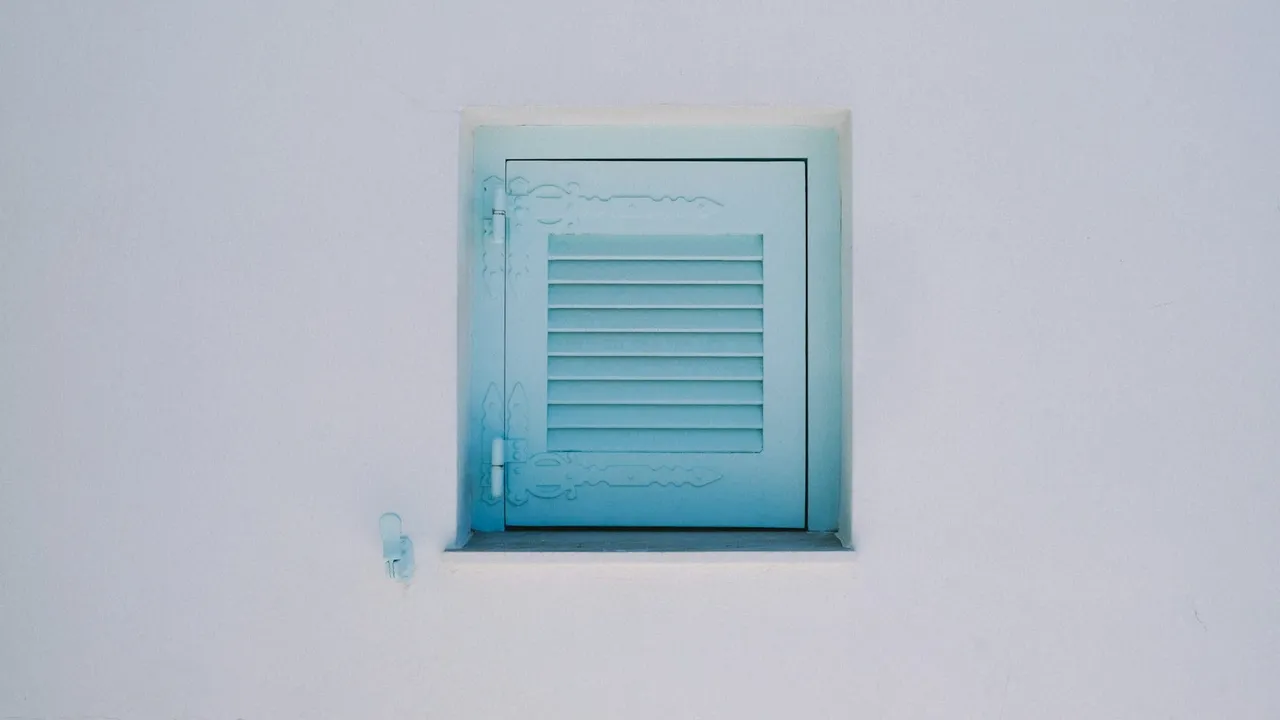
The Junta de Andalucía, the regional government, publishes a manual on using and maintaining a home. It recommends a few simple checks when you first take possession of a new home, before reporting any defects to the developer (Manual General, Junta de Andalucía, in Spanish). It was not written for a house reopened after the winter, but its electrical checks are the ones such a house needs, so this guide starts with them and then moves on to the walls.
First, the electrics: three checks from the Junta’s manual
- Press the test button on the RCD, the residual current device in your consumer unit (in Spanish, diferencial). It should trip at once. If it does not, the manual says, it is faulty and you are not protected against earth leakage: call an authorised installer.
- Check that power reaches every socket. A lamp, or your phone on its charger, taken from room to room is enough.
- Check that every switch turns its light on and off.
The same manual, and the Spanish Ministry of Industry’s technical guide to the low-voltage regulations, advise pressing the RCD test button at least once a month (Ministry guide, in Spanish). It is a recommendation, not a legal requirement: the regulations themselves set no frequency.
If the RCD trips: find the circuit
When the RCD trips and will not stay up, the Junta’s manual and the Ministry’s guide describe this method. Switch off all the small circuit breakers next to it, switch the RCD back on, then switch the breakers on again one at a time. The one that makes the RCD trip leads you to the fault. The Ministry’s guide adds a step: unplug everything on that circuit and switch it on again. If it holds, the fault is in an appliance; if it trips again, it is in the circuit: leave it off, the rest of the house can carry on, and call an authorised installer. Do not keep forcing it back on.
If the breaker that trips belongs to the air conditioning, follow the unit’s manual: Daikin’s, for example, says to switch off its main power switch if a fuse, breaker or earth-leakage device trips frequently (Daikin operation manual, in Spanish). The unit itself is a job for an air-conditioning technician; the circuit feeding it is ours.
No, a home needs no periodic inspection by an inspection body
It is a common worry. Spain’s low-voltage regulations list the installations that must be inspected periodically by an inspection body, and a flat or a villa, as a home, is not on that list; the shared installations of a residential building are, if their total power is over 100 kW, every ten years (ITC-BT-05, section 4, in Spanish). What the regulations do require is that the owner keeps the installation in good working order and has any alteration made by a registered installation company (article 20); repairs are that company’s job too (ITC-BT-03).
The earthing is the exception to watch: the regulations themselves say that technically competent staff must check it at least once a year, when the ground is driest, by measuring its resistance (ITC-BT-18, section 12, in Spanish); the Junta’s manual gives every five years. If your house is older, our guide to rewiring an old Spanish villa explains what usually needs updating, and our electrical service covers the check.
Damp: air the house, then look before you paint
In a house that stays shut the air hardly moves, and surfaces cooler than the air around them collect condensation (WHO guidelines on dampness and mould). The UK government names the usual places: window frames, corners and walls behind sofas or wardrobes (GOV.UK). The Costa del Sol winter is humid: the Spanish building code’s own climate data give Málaga an average outdoor relative humidity of 70 to 72 % from October to February. Those figures are for the outdoor air, not for your walls: the same document sets a monthly average of 80 % humidity at a wall’s surface as the limit for the risk of surface condensation and mould (Spanish building code, condensation guidance, in Spanish).
So the first thing to do when you arrive is open the windows, and keep doing it every day: the Junta’s manual advises airing bedrooms daily, for about 30 minutes in the morning, and IDAE, Spain’s energy agency, says in its heating advice that about ten minutes is enough to renew the air in a room (IDAE practical energy guide, in Spanish). Then look at the corners and behind the furniture. If there is mould, do not simply paint over it: the UK government’s guidance puts it plainly, “Simply removing surface mould will not prevent the damp and mould from reappearing”. Find the cause first, as we explain in what to check on damp walls before painting.
Outside: salt, sun and the paint
The Junta’s manual asks owners to watch the façade for damp, cracks and loose pieces, to have a specialist check its joints and junctions every three years and the state of its paint every five, and to check the seals of windows and doors every year. For iron and steel in a sea climate it recommends a second coat of anti-rust primer. Salt is the other reason not to rush the paint: Resene, a New Zealand paint maker, warns that once salt has been painted over “it cannot be removed”, so it has to be washed off first (Resene). Our guide to painting a façade by the sea explains how to prepare it.
Salt and dust also settle on solar panels: if the house has them, Solar Master, our sister company (same team), offers a yearly inspection and clean through its solar panel maintenance plan.
If you let the house to tourists
Andalucía’s rules for tourist rentals ask for cooling in bedrooms and living rooms if you let between May and August, sockets in every room, a light next to the bed and a smoke detector near the kitchen, among other things. Opening the house is the moment to check that all of it works. We explain the rules, with their sources, on our page for holiday rental owners.
Next time you close it
The Junta’s manual has two tips for long absences. Switch the installation off at the main RCD; if you want to leave something running, such as the fridge, leave the RCD and that circuit’s breaker on and switch off the rest. And do not close the shutters tight: leave a small gap between some of the slats so that air can move between the shutter and the window.
And if something trips or a stain has appeared, tell us what you found: we come and look at it at no cost and give you a written price.
Shall we talk about your project?
Site visit and no-obligation quote. We reply on WhatsApp or call you whenever suits you.
or ask for a written quote →Keep reading
Guide · Electrical
Electricity in your name after buying in Spain
Putting the electricity in your name — the cambio de titular, or change of account holder — is one of the first formalities after buying, and one of the most confusing: many people believe they need a new electrical certificate. If only the name on the contract changes, you do not.
Read the guide: Electricity in your name after buying in Spain
Guide · Electrical
Is your consumer unit ready for solar panels?
Panels go on the roof, but they connect to your consumer unit. In a villa of a certain age, that unit is exactly the part nobody has looked at.
Read the guide: Is your consumer unit ready for solar panels?