
Guide · Painting
Your community wants to repaint the building on the Costa del Sol: what you pay, when it is compulsory and how to vote from abroad
The notice arrives by email or is taped to the lift: an owners’ meeting to approve repainting the building, and a levy. If you live abroad, this is what Spanish law says about whether you can refuse, how much you pay, how your vote counts and what happens if you say nothing.
 By VARELUX team 5 November 2026 · 10 min read
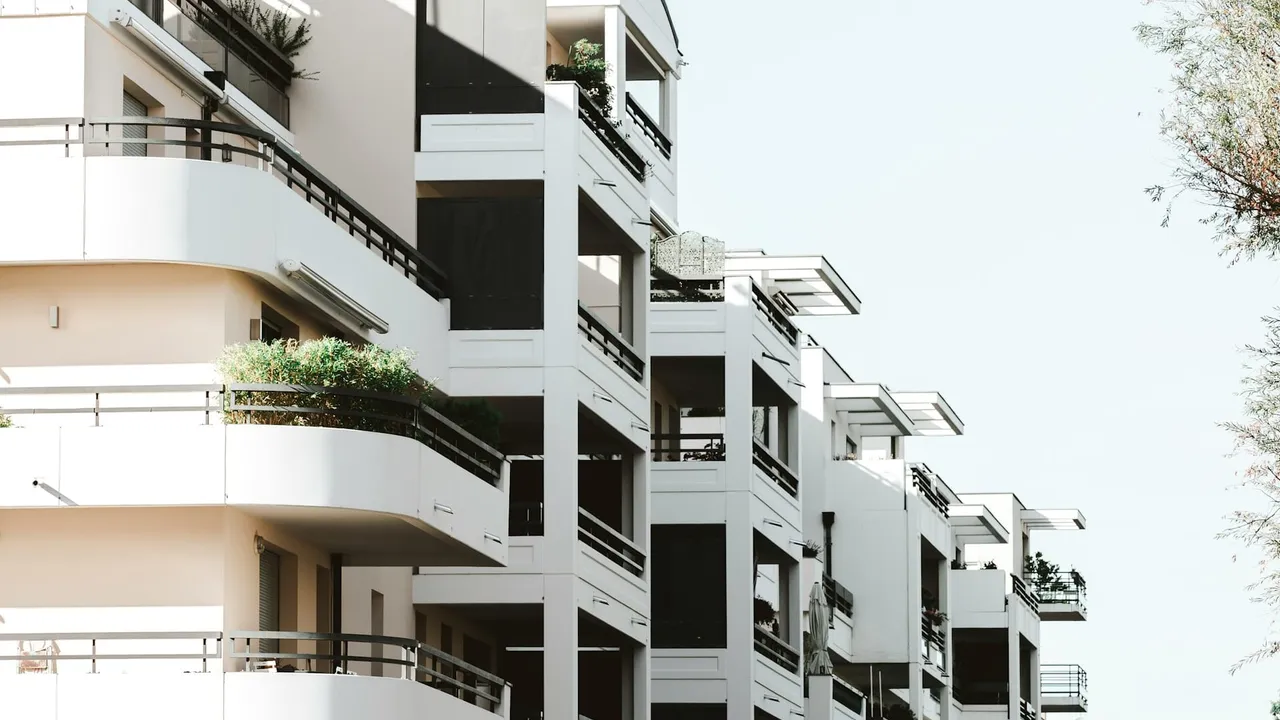
Owners of flats on the Costa del Sol ask the same things on the expat forums when the community decides to paint: whether they can refuse, why a penthouse pays more than a studio, how to vote from another country and whether short-term rentals can be charged extra. Spain’s Horizontal Property Law answers almost all of it, and each answer below links to the article it comes from.
This guide is general information checked on 5 November 2026, not legal or tax advice: for your own case, ask your community’s administrator or a lawyer.
Does the community need a vote to repaint the building?
Not when the work is needed to keep the building in good repair. The law makes compulsory, with no prior agreement of the owners’ meeting, the work needed for the upkeep and the legal duty of conservation of the building, “incluyendo en todo caso […] las condiciones de ornato”: including its appearance, and whatever the authorities impose (Horizontal Property Law, article 10.1.a, in Spanish). For that work the meeting does not decide whether to do it: it approves the quote and the works (article 14.c) and decides how to share the levy and when it is paid (article 10.2).
The law does not mention paint or set a number of years. In our reading, repainting falls under that rule when the building needs it: paint that is peeling or letting damp in, loose render, a deteriorated façade, or an order from the town hall. A change of colour with the paint in good condition is not needed for upkeep, so it goes to a vote. If owners disagree on whether a job is necessary, the meeting decides, and those affected can ask for arbitration or a technical report (article 17.10). Before the meeting, it helps to know what the façade actually has: damp in a wall, cracked monocapa render or salt from the sea air each call for a different job.
How much do you pay?
Each owner pays the building’s general costs according to the share (cuota de participación) set in the deeds that created the community, or in its statutes if they say something different (article 9.1.e). That is why a large penthouse pays more than a studio, and not using a part of the building does not free you from paying for it (article 9.2). The levy (derrama) is a one-off payment shared in the same way: the law uses the word without defining it.
Every community must also have a reserve fund of at least 10 % of its last ordinary budget, and it exists precisely for conservation, repair and rehabilitation work (article 9.1.f). The fund belongs to the community, not to each owner. If it does not cover the repaint, the rest is paid through the levy; and whatever is taken from the fund for this kind of work has to be topped up by the owners at the start of the next budget year (first additional provision).
For an improvement that is not needed for upkeep, the rule is different. If it is approved by three fifths of all the owners, who must also hold three fifths of the shares, and your part of the cost exceeds three months of ordinary community fees, an owner who voted against does not have to pay it (article 17.4). That exemption does not exist for necessary work. Nor for energy-efficiency work that can be proven with the building’s energy performance certificate, such as insulating the façade: a majority of the owners holding a majority of the shares can approve it when the yearly cost passed on, after grants and financing, is no more than twelve months of ordinary fees, and then the law says expressly that the dissenting owner does not get the exemption (article 17.2).
Your flat is a holiday rental: can they charge you more?
Yes, up to a limit. With the vote of three fifths of all the owners, who must also hold three fifths of the shares, the community can set special fees or increase the share of common costs of a flat used for tourist rental, as long as the increase is no more than 20 %; the agreement does not apply backwards (article 17.12). Absent owners who do not object in time count towards that majority, as explained below, and that includes the owner of the flat concerned. That rule dates from 2019 and the 2025 reform left the 20 % unchanged. The law does not say whether the increase also applies to a one-off levy or only to regular fees, so ask the administrator how your community’s agreement is worded.
The same 2025 reform added a requirement for anyone starting a new tourist rental in a building: the community’s express approval beforehand (article 7.3). We explain what else applies to letting your home on our page for holiday rental owners.
You live abroad: notices, the meeting and your vote
Notices. You must give the community’s secretary an address in Spain for notices. If you do not, they go to the flat itself, and a notice handed to whoever is staying there, a guest included, has full legal effect. If delivery there is impossible, a notice on the community board takes effect after three calendar days (article 9.1.h).
Notice period. The annual ordinary meeting must be called at least six days in advance; an extraordinary one, which is where works are usually approved, with whatever notice allows every owner to learn of it (article 16.3). You may read in English that three days are enough for the annual meeting: the three days apply to a meeting called again when the first did not take place (article 16.2) and to the notice board.
Voting by proxy. You can attend through someone else, and a letter signed by you is enough to prove it (article 15.1). If the flat belongs to two people, such as a couple, they name one representative. An owner who is behind with payments to the community can speak at the meeting but not vote, unless the debt has been challenged in court or deposited (article 15.2).
Silence counts as a yes. If you were properly called, missed the meeting and, once told what was agreed, do not send the secretary your disagreement within 30 calendar days, by a means that leaves proof of receipt, your vote counts in favour. There are two exceptions: services whose cost cannot be passed on to owners who did not expressly vote for them, and changes made for one owner’s private use (article 17.8). If you disagree, an email with acknowledgement of receipt or a burofax to the secretary within that time leaves the record. Objecting makes your vote a no; it does not free you from paying for work the building needs, and only for an improvement, under the conditions explained above, can it exempt you from paying.
Can you paint your own balcony a different colour?
Not on your own. The Civil Code counts as common elements the façades, “con los revestimientos exteriores de terrazas, balcones y ventanas, incluyendo su imagen o configuración”: with the outer coverings of terraces, balconies and windows, including their image (Civil Code, article 396, in Spanish). Each owner must respect the common elements, whether in general or private use (Horizontal Property Law, article 9.1.a). An owner can change things inside the flat, but not the outside appearance of the building (Horizontal Property Law, article 7.1). A new colour for the façade, or part of it, needs a community agreement; the law does not set a specific majority for a change of colour, so check your statutes and ask the administrator.
If you do not pay, or you are selling
The community can claim unpaid ordinary and extraordinary costs through a fast-track court procedure (monitorio), and if the owner opposes it, the community can ask for a preventive seizure of assets, which the court grants without the community having to post a bond (article 21). The flat itself answers for those debts: whoever buys it is liable, with the flat, for what is unpaid from the part of the year of purchase already due and the three previous calendar years, and the seller must show a certificate of debts with the community to sign the deed, unless the buyer expressly waives it; the secretary has to issue it within seven calendar days (article 9.1.e). Levies for compulsory work follow the same rule (article 10.2.c), and a levy for an improvement is paid by whoever owns the flat when the payment falls due (article 17.11). If you sell and do not tell the secretary, you remain liable, together with the buyer, for debts that arise afterwards, unless the community’s governing bodies already knew of the sale (article 9.1.i).
Challenging the decision
An agreement can be challenged in court if it breaks the law or the statutes, seriously harms the community to benefit some owners, or seriously harms an owner who has no legal obligation to bear it. Only owners who voted against, those who were absent and those wrongly denied their vote can challenge it, so if your proxy voted yes, you cannot. The deadline is three months from the meeting, or one year if the agreement breaks the law or the statutes; for an owner who was absent, it runs from when the agreement was notified. To challenge it you must be up to date with your payments or deposit what you owe, except for agreements on the shares themselves, and the challenge does not stop the work unless the judge orders it (article 18).
VAT on the community’s repaint
Renovation and repair work on residential buildings is taxed at 10 % instead of 21 % when the customer is the community of owners, the building was finished at least two years before, and the materials supplied by the contractor are no more than 40 % of the price (VAT Law, article 91.Uno.2.10º, in Spanish). In the text of the law, the 10 % here depends on the community being the customer for the work, not on how each owner uses their flat; we have found no Tax Agency ruling on a building with holiday flats. The 21 % for holiday rentals that we explain in having work done on your home from abroad concerns work on your own flat, where you are the customer.
From 1 December 2026, a decree-law whose ratification by the Congress had not been published by 5 November 2026 would make the 10 % depend on paying by card, bank transfer, named cheque or payment into the contractor’s account (Royal Decree-law 29/2026, article 7, in Spanish). A community that pays in cash would risk the reduced rate, so check its status before counting on it.
Málaga city: the building inspection can make it compulsory
Andalucía lets each town hall require, by by-law, a periodic inspection of buildings, with the frequency the by-law sets and a minimum of ten years (LISTA, article 145, in Spanish). Town halls must also order the work needed to keep buildings in repair, with up to ten coercive fines, at least a month apart, each of 10 % of the estimated cost and between €600 and €5,000 (article 144). Málaga city does: buildings over 50 years old must submit an inspection report, which looks at the façades and their watertightness, and renew it every ten years; if the report says work is needed, the owners must apply for the works licence within three months (Málaga by-law on building inspection, articles 28 to 34, 2013, in Spanish). In the 2026 round, buildings built in 1975 submit their first report and those built in 1965 renew it, by 31 January 2027 (Málaga planning department, in Spanish). In other towns, ask the administrator whether a local by-law applies; and if the façade only needs painting, whether it needs a permit is covered in do you need a permit to paint your facade.
A quote the whole community can read
If your community is collecting quotes, we can visit the building and send a written quote addressed to the community, with the VAT and the total, in English and Spanish, so that owners who live abroad can read it too. During the work we send photos of the progress, and the invoice goes to the community. Tell us the building and the town through our contact page, or see how we work on façades and painting.
Shall we talk about your project?
Site visit and no-obligation quote. We reply on WhatsApp or call you whenever suits you.
or ask for a written quote →Keep reading

Guide · Painting
Waterproof your flat roof before solar panels
A flat roof that already lets water through will not improve with panels on top, and fixing it afterwards is harder. This is what Spain’s waterproofing manufacturers, the building code and the town halls say about the order of the work.
Read the guide: Waterproof your flat roof before solar panels
Guide · Painting
Work on your Costa del Sol home from abroad
The flat needs painting or new wiring and you are a flight away. Almost all of it can be arranged from home, but six things decide whether it goes smoothly: the quote, the community of owners, the town hall, the VAT, the invoice and who holds the keys.
Read the guide: Work on your Costa del Sol home from abroad